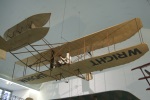
The Wright Flyer was the first successful powered airplane. On December 17, 1903, Orville and Wilbur Wright made history by achieving the first controlled, sustained flight of a powered, heavier-than-air aircraft in Kitty Hawk, North Carolina.
Key Facts:
Length: 21.3 feet (6.5 meters)
Wingspan: 40.3 feet (12.3 meters)
Engine: 12 horsepower
Number of Flights: 4 on the first day
The Wright Flyer's successful flights marked the beginning of the aviation era, paving the way for modern airplanes and transforming transportation worldwide.
Flamingos
Flamingos are large, brightly colored birds known for their distinctive pink feathers, long legs, and unique beaks. They are often seen standing gracefully in shallow waters, filtering food like algae and small crustaceans.
Interesting Facts:
Coloration: Pink feathers come from their diet rich in beta-carotene.
Social Behavior: They live in large colonies called flocks.
Habitat: Found in parts of Africa, Europe, Asia, North America, and South America.
Lifespan: Can live up to 20-30 years in the wild.
Flamingos are known for their synchronized group behaviors, such as mass bathing and communal nesting, which help protect against predators and maintain their vibrant color.
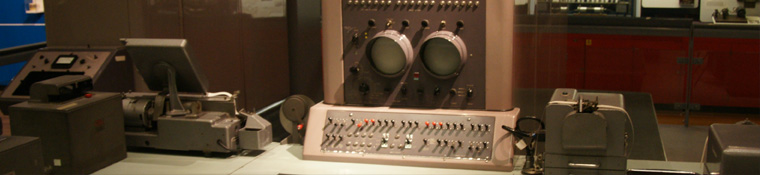
Can you guess what this picture is?
This vintage computer control panel represents the early days of computing technology. Before the advent of modern personal computers, large mainframes and control panels like this were used to perform complex calculations and data processing.
Did You Know?
Mainframes were the backbone of early computer networks.
Operators manually input data using switches and dials.
These systems were primarily used by governments and large corporations.
Understanding the evolution of computer technology helps us appreciate the advancements that have made today's devices more powerful, compact, and user-friendly.